Gateshead & South Tyneside LPC  
  • Home
  • News Stream
  • Services
    • Gateshead - Dual Screening Service
    • Gateshead - Naloxone Supply Service
    • Gateshead - Alcohol IBA
    • NHS Health Checks - Gateshead
    • NHS Health Checks - South Tyneside
    • EHC-South Tyneside
    • EHC-Gateshead
  • Events
  • Contact Us
  • Search
  • Update Training Feedback

Chairmans Blog:  Honestly, things have changed......

14/7/2014

0 Comments

 
Picture
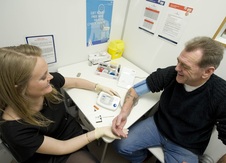
I had an email the other day from South Tyneside CCG regarding an issue under public consultation at the moment; namely the new emergency care hub idea - that is the idea to develop a one stop shop on the general hospital site. 

There were very few members of the public at the first consultation event, but those that were there seemed to agree that the current walk in centre is a convenient and accessible way of obtaining services, but that these could potentially be delivered by the person's GP or community pharmacy. 


Good news for pharmacy you may think? 


Well, yes and no, because although the public welcomed pharmacy's contribution, anything other than the supply function simply wasn't really understood and more shockingly, the entire audience was unaware that community pharmacies these days have private consultation rooms!

We all have some real work to do here; the LPC and contractors...we simply must raise our game here...for pharmacy the consultation room is a given now, but why are the public so unaware?



0 Comments

Chairmans Blog:  Throwing out the good with the bad?

27/6/2014

0 Comments

 
Picture
A  patient returned a bag of medication yesterday...a whole load of out of date medication and some controlled drugs to destroy.
 
Today, the same patient rang and said "can I have my old medication back please - I need the antibiotics and the tamoxifen"
 
Well, she didn't get them - and we referred her back to the GP to discuss her needs...we explained that returned medication is professionally disposed of in a timely manner (we don't keep it lying around!)
 
It's amazing how she ended up with expired antibiotics in the first place and the fact that she wanted to take expired tamoxifen doesn't bear thinking about??
 
Unwanted or out of date medication should be promptly returned to a pharmacy for destruction! 

0 Comments

Chairmans Blog: Anaphylaxis service?

7/5/2014

0 Comments

 
Picture
A friend of mine is allergic to kiwi fruit and gets a nasty reaction if he eats, or drinks kiwi products...
 
It might come as a bit of a surprise to many that 1 in 1,300 people suffer anaphylactic reactions...leading to about 30 deaths per year! Commonly these reactions are due to nuts, insect stings, pollen etc, but even the humble kiwi fruit is dangerous for some...It's important that people avoid the allergen(s) that they are sensitive to...but sometimes they fall victim to the process of anaphylaxis - and many head naturally to a pharmacy for help and support.

As a consequence, all healthcare professionals in pharmacies and their staff need to be aware of anaphylaxis; and be able to offer treatment if necessary...In a survey from 2013, results showed that only 12% of pharmacists had the ability to deliver treatment.

Perhaps each pharmacy should have an anaphylaxis champion to ensure all staff are up to speed?

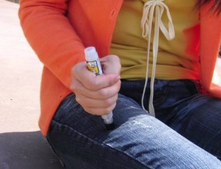
Perhaps each pharmacy should have adrenaline auto-injectors specifically for emergency use? Many now have them as part of the flu vaccination service, but are they available all year round?
 
Maybe the answer is that there should be a locally commissioned public health service that ensures pharmacies stock these products and staff are trained to be able to offer emergency treatment when called upon?

0 Comments

Chairmans Blog - Social Norms.  What are they?

25/2/2014

0 Comments

 
Picture
What is a Social Norm?
 
This is a new way of addressing a wide range of negative behaviours among young people...It works by challenging the misconceptions about what is normal within a peer group and regularly telling the group about its actual healthier normal behaviour - and by doing so, shifts in normal behaviour can be achieved!
 
In doing so it is a proactive system; hopefully amending behaviour and preventing harm - rather than more traditional methods which rely on reacting to problems already occurred via addiction therapy or EHC treatment etc.
 
It's also different to the other preventative methods that rely on scaring people - which often prove a failure as people get used to the horror stories and stop taking notice.
 
I had a demonstration of this at a recent meeting of the South Tyneside Sexual Health Partnership Group where this system is being used to challenge some of the behaviour exhibited by young people...as young people often overestimate their friends/peers attitudes towards sex, alcohol, tobacco and drugs and like to conform...
 
It works by designing a survey and asking young people direct questions about their behaviour and attitudes. Once "normal" is worked out for that group of people (using the collected data), the information is communicated back to them in a positive way...to reduce numbers of people likely to take risks and challenge those that are taking risks - as they are now the ones who aren't conforming to the social norm...

0 Comments

Happy New Year

1/1/2013

0 Comments

 
Picture

As we begin a new year, my mind has been casting back and thinking of the issues we faced over the last one: huge numbers of contract applications, complicated tendering schemes, medicine shortages, changes to the methadone payment, payment problems via the PCT/PPD to name just a few...and I've been wondering what's in store for us this year??
 
Well, by the time you read this, contractors will be coming to terms with reduced remuneration caused by category M reductions in October last year - and even if we accept the rationale for this, it's difficult to bear...
 
The PCTs shut up shop at the end of March; so in April we expect the CCGs and the new Commissioning Board with its local area teams to open for business. We also expect the health and wellbeing boards of the local authority to take up the public health agenda. Pharmacy services will be commissioned from these new entities, but they will take time to find their feet - so don't hold your breath for any new services for a while...
 
So, in conclusion,  I think next year will be an enormous challenge for contractors - but rest assured that your LPC members will pick up the baton and run on your behalf wherever we can to obtain the best deal we can for community pharmacy and to look after the interests of contractors. 
 
On another note,
I hope that the interim financial arrangements that are currently in force will be replaced by a considered financial settlement that is fair to contractors - based on the cost of service enquiry and the numbers of contracts. Pharmacy has suffered over the last few years partly because of the fact that the financial package that funds community pharmacy (formally known as the global sum) - whilst increasing slowly with costs - is based on historic numbers of pharmacies (~10,000) and not the almost 13,000 pharmacies we have today. So although the overall sums involved have increased in line with inflation, the fact that there are so many more contracts now means we all have a smaller slice of the cake...
 
A friend of mine, and past Secretary of our Committee, once said "If the Government want pharmacy to deliver as we know it can, then the DOH needs to remember that -  you get nowt for nowt and precious little for sixpence!"
 
Happy New Year everyone!

0 Comments

Medievil Medicine & Marzipan

17/12/2012

0 Comments

 
Picture
At Christmas-time there're a lot of different marzipan products available - marzipan fruits, chocolates cakes and so on. It started me thinking about what marzipan is and what it was used for originally...
 
The word marzipan probably means "march bread"  and is a German word - It was known as marchpane in old English and was probably derived from the Italian mazipane.
 
Most people think of it now as confectionary consisting of sugar (or honey), almonds and colouring; or perhaps as a paste included in stollen (or covering a cake). 
 
Marzipan probably came from the Orient originally and was introduced into Europe during the crusades. At this time it was a really expensive luxury product - because sugar was really costly and not widely available at this time. It was also considered a medicine - and because of this it was mostly produced by pharmacists in medieval times!
 
According to ancient literature, marzipan seems to have been used in those far off days for its beneficial effect on the brain - and perhaps there is some science in that because almonds contain some lecithin - which may have an effect on memory function and learning?
 
Before you all go out and start consuming vast quantities, however, please bear in mind the calorific nature of marzipan - it contains a lot of energy - and excessive ingestion will lead to weight gain!

0 Comments

Good news for chocolate lovers?

12/12/2012

0 Comments

 
Picture
As I write this, my thoughts are turning to the festive period - A time where many people eat and drink to excess...I love chocolate, and at this time of year there are so many gorgeous products to choose from...and there's an assumption that it's all really bad for health? Well, perhaps not - according to some recent studies...you may be surprised (and pleased to learn?) that moderate chocolate consumption has been shown to lower stroke risk and blood pressure...
 
According to a recent Swedish study that looked at stroke risk in men, the group that ate the most chocolate (of all types - not just dark chocolate!) was 19% less likely to suffer a stroke than the group that consumed the least. Perhaps this benefit is related to the flavonoids in chocolate? Flavonoids certainly seem to provide some degree of cardioprotection as they are antioxidants, have anti-inflammatory actions and provide a degree of anticlotting. It's also possible that these products may decrease concentrations of bad cholesterol.
 
Another Cochrane Collaboration meta-analysis suggests that chocolate and cocoa products may reduce blood pressure slightly. The results showed that patients who ate 105g of cocoa products each day had reduced systolic blood pressure of about 3mm of mercury and reduced diastolic by >2mm of mercury.
 
This new evidence seems to give the green light to eat plenty of chocolate over the Yuletide, but as the authors of the Swedish study point out - chocolate is high in sugar, fat and calories so should only be consumed in moderation...
 
But, it's almost Xmas - and I'm off to eat some chocolate now...Happy Christmas everyone!

0 Comments

Another Coffee Sir?

11/7/2012

1 Comment

 
Picture
I think I drink quite a lot of coffee a day...probably 4 cups during the day (mostly cold!) when I'm at the shop, plus others. Many pharmacists drink considerably more than this...and some people I know drink it all the time - especially when working long hours.
It started me thinking about the health benefits and risks of coffee...

Coffee is one of the most popular liquids in the world - which makes caffeine (a major component) one of the most widely consumed pharmacologically active compounds on the planet - as it is the major "active" molecule in coffee. Interestingly, however, coffee contains many thousands of other compounds, and so the effects of coffee on the body are not entirely due to the caffeine. Also, caffeine is found in tea, cola and cocoa not just coffee! The most common coffee varieties, Arabica and Robusta, contain about 100mg and 200mg respectively per average 150ml cup. Tea, cola and cocoa contain a lot less caffeine, approximately 37mg, 25mg and 4mg for a similar volume respectively.

 Most people drink coffee because they like it, although some do so because caffeine stimulates the central nervous system, alleviating fatigue, increasing wakefulness, and improving concentration and focus. 

The rate of elimination of caffeine varies between individuals, but the half life is generally between 5 and 7 hours - and this can vary between individuals by a factor of up to 4 - and also seems to be dose dependent - so it's best avoided in the evening. So no coffee after 6pm!

So, how much coffee is ok to drink?
The most common safe level seems to be 2-4 cups of regular brewed coffee per day; and it's only when larger quantities are drunk that people experience side-effects such as: Insomnia, nervousness, restlessness, irritability etc. Some people are really sensitive to caffeine, and even low doses in people that don't drink coffee regularly can have unpleasant effects...(as some tolerance seems to develop with regular use).  Having looked into it, I guess my 4 cups of coffee are not too bad after all...I certainly don't have any of the side-effects...
Picture
1 Comment

    RSS Feed

    Picture

    David Carter

    Chairman of Gateshead & South Tyneside LPC gives you his thoughts of the day

    Archives

    July 2015
    May 2015
    March 2015
    January 2015
    December 2014
    November 2014
    October 2014
    September 2014
    August 2014
    July 2014
    June 2014
    May 2014
    April 2014
    March 2014
    February 2014
    January 2014
    November 2013
    October 2013
    September 2013
    August 2013
    July 2013
    June 2013
    May 2013
    April 2013
    March 2013
    February 2013
    January 2013
    December 2012
    November 2012
    October 2012
    September 2012
    August 2012
    July 2012
    June 2012
    May 2012
    April 2012
    March 2012
    February 2012

    Categories

    All
    100 Hours
    Alcohol
    Atorvastatin
    Changes
    Clinical
    Coffee
    Communications
    Consultation
    Crime
    Debate
    Diabetes
    Diamorphine
    Drug Related Deaths
    Drug Shortage
    Drug Tariff
    Drug Tariff Simplification
    Ethical Dilemma
    Events
    Facts
    Fees
    Finance
    Fitness
    Flu
    Fruity Friday
    Funding
    Gphc
    Great North Run
    Guest Blog
    Harm Reduction
    Health Promotion
    Inspections
    Jobs
    Lpc
    Lpn
    Media
    Methadone
    Misc
    Morphine
    Mur
    Musings
    New Contracts
    Nms
    On The Front Line
    Paracetamol
    Pharmabase
    Ppd
    Pre Reg
    Profession
    Red Seperators
    Regulation
    Revalidation
    Services
    Smoking
    Standards
    Studies
    Substance Misuse
    Training
    Vote
    Waste

Gateshead & South Tyneside Local Pharmaceutical Committee 2016


Photos from jo9ce4line0, [puamelia], NHSE, University Hospitals Birmingham, Karrierebibel.de, kellyv, hectorir, Jair Alcon Photography, Arria Belli, garryknight, JD Hancock, dyobmit, Jeff Kubina, Keith Williamson, I See Modern Britain, JVanSweden, dan-morris, torbus, shawncampbell, NHSE
  • Home
  • News Stream
  • Services
    • Gateshead - Dual Screening Service
    • Gateshead - Naloxone Supply Service
    • Gateshead - Alcohol IBA
    • NHS Health Checks - Gateshead
    • NHS Health Checks - South Tyneside
    • EHC-South Tyneside
    • EHC-Gateshead
  • Events
  • Contact Us
  • Search
  • Update Training Feedback