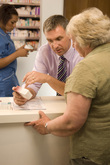
There has been a lot of chatter recently about having more pharmacy involvement in GP surgeries. I’m absolutely wedded to the principle that this is a good idea...as, without a doubt, this will improve patient care, and take some of the load off hard pressed GPs. I’m not exactly sure who will pay for this, however, and I don’t want it to come out of community pharmacy remuneration... My wife is a prescribing support pharmacist in many surgeries and I know that if she was commissioned to do more, then the result would be better care for patients – especially those that are discharged from hospital. But why stop there? Surely with better IT links and a common patient record, then community pharmacies could do so much more...Community Pharmacists are a rich resource that could be used more effectively to improve patient care – we just need to be given the chance!

0 Comments
Chairmans Blog: There is nothing minor about the new Minor Ailment Scheme in South Tyneside8/3/2015 Great News Everyone! The LPC has been working with the CCG in South Tyneside for a long time now on a complete re-boot of the minor ailment scheme...with a much bigger formulary and proper referral into community pharmacy. In April the new service begins...with a soft launch initially, followed by full-on marketing as THINK PHARMACY FIRST. The new service launch event later this month will familiarise everybody with the formulary and indications. I’m sure you will be pleased with the range of products we can supply on the new service, but, in addition more products including some on PGD will follow in due course. Members of the public will be able to access treatments for common ailments from the network of community pharmacies in a similar manner to that offered by the GP, walk-in-centres or accident and emergency at a fraction of the cost to the NHS – and more conveniently in a much timelier manner. The pharmacies in South Tyneside will act as mini walk-in centres themselves!! Not only that, but patients will be actively referred into pharmacies from other providers - and eventually from NHS 111 also! There’ll be a lot of advertising all over the place to position pharmacy firmly at the centre of this part of urgent care. There's nothing minor about this new minor ailment scheme...and it’s going to get better. It’s well known that patients hoard medication; and this is perhaps understandable when they are reliant on the medicines for their daily life...sometimes they store them in odd places for emergencies (car, caravan, suitcase etc.) so occasionally they appear to use more medication than actual. There’s also the issue that patients who are dependent on medication will want to try and have a “buffer” in case there’s a shortage, or some problem ordering them. So, sometimes when GP staff are looking at data they may see some odd patterns developing over time. What shouldn’t happen is patients perpetually ordering prescriptions early or unnecessarily (for creams, inhalers etc.) as this is wasteful for the NHS and might alert prescribers to inappropriate dosing or conditions getting worse. Inhalers in particular can be a big problem. If a patient is an asthmatic they should use around 1 salbutamol inhaler per month (certainly not 2). Two puffs four times a day is too much - and probably shows that the asthma is out of control, and the patient needs a review. If a patient has COPD, they could use considerably more...and so It’s really important for asthma patients to understand this...and for pharmacies who order medication on behalf of them to be aware of the condition and hence possible overuse. Inhalers must be used appropriately and not just ordered willy nilly for convenience. They must also be used correctly to ensure accurate dosing, so technique is important – and this is a role for community pharmacy. When doing an MUR on a respiratory patient, we should check whether the patient is asthmatic or not; and if yes, then we should check dosage and technique...and so add pharmaceutical care to maximise therapy. If the patient is using the inhaler too much then the GP should be informed via feedback. If the patient has COPD, a similar review should be done to keep a watching brief on this progressive disease. It’s in everybodys interest that only inhalers that are necessary are ordered...inhaler waste is not acceptable and neither is out of control patients! Chairman Blog: Act now to help remove the threat of criminal prosecution from dispensing errors8/3/2015 The department of Health has launched a consultation into dispensing errors. For too long pharmacists have practiced with the threat of criminal proceedings against them if an innocent dispensing error has taken place. Hopefully once the consultation has taken place changes will redress ‘imbalances’ between legislation and regulation. and bring pharmacists and pharmacy technicians, who inadvertently make dispensing errors, more in line with the handling of errors made by other healthcare professionals. By removing the fear of criminal prosecution, pharmacists, pharmacy technicians and pharmacy teams will be encouraged to report more dispensing errors, so the NHS can learn from when things go wrong, and stop them happening again. In the unlikely event that a pharmacy professional deliberately sets out to harm patients, they would continue to face the full force of criminal law. These changes are crucial to driving high quality patient care and improving patient safety, developing pharmacy practice and enabling innovation. Please get involved in the consultation. This is a link to the discussion papers:- https://www.gov.uk/government/consultations/pharmacy-legislation-on-dispensing-errors-and-standards This is a direct link to the consultation:- http://consultations.dh.gov.uk/medicines-pharmacy-and-industry/rebalancing-medicines-legislation-and-pharmacy-reg/consultation/intro/view |
David CarterChairman of Gateshead & South Tyneside LPC gives you his thoughts of the day Archives
July 2015
Categories
All
|