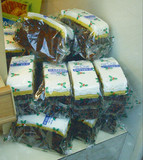
At Christmas-time there're a lot of different marzipan products available - marzipan fruits, chocolates cakes and so on. It started me thinking about what marzipan is and what it was used for originally...
The word marzipan probably means "march bread" and is a German word - It was known as marchpane in old English and was probably derived from the Italian mazipane.
Most people think of it now as confectionary consisting of sugar (or honey), almonds and colouring; or perhaps as a paste included in stollen (or covering a cake).
Marzipan probably came from the Orient originally and was introduced into Europe during the crusades. At this time it was a really expensive luxury product - because sugar was really costly and not widely available at this time. It was also considered a medicine - and because of this it was mostly produced by pharmacists in medieval times!
According to ancient literature, marzipan seems to have been used in those far off days for its beneficial effect on the brain - and perhaps there is some science in that because almonds contain some lecithin - which may have an effect on memory function and learning?
Before you all go out and start consuming vast quantities, however, please bear in mind the calorific nature of marzipan - it contains a lot of energy - and excessive ingestion will lead to weight gain!
The word marzipan probably means "march bread" and is a German word - It was known as marchpane in old English and was probably derived from the Italian mazipane.
Most people think of it now as confectionary consisting of sugar (or honey), almonds and colouring; or perhaps as a paste included in stollen (or covering a cake).
Marzipan probably came from the Orient originally and was introduced into Europe during the crusades. At this time it was a really expensive luxury product - because sugar was really costly and not widely available at this time. It was also considered a medicine - and because of this it was mostly produced by pharmacists in medieval times!
According to ancient literature, marzipan seems to have been used in those far off days for its beneficial effect on the brain - and perhaps there is some science in that because almonds contain some lecithin - which may have an effect on memory function and learning?
Before you all go out and start consuming vast quantities, however, please bear in mind the calorific nature of marzipan - it contains a lot of energy - and excessive ingestion will lead to weight gain!

 RSS Feed